
Service Area: San Diego, Orange County, Los Angeles
★★★★★ Rated on Google, Yelp, HomeAdvisor & Thumbtack
Whether you’re a first-time solar buyer or replacing an aging system, Solion Energy makes residential solar installation in San Diego straightforward – from permit to PTO, we handle everything. No commissioned sales reps pushing you toward oversized systems. No subcontractors you’ve never met showing up at your door. Just a licensed San Diego solar team with a simple approach: right-size the system, install it properly, and stand behind the work.
We start with a site visit and a review of your SDG&E utility bills. We look at your roof’s age, condition, orientation, and shading, then design a system that matches your actual energy consumption — not the largest system we can sell you. You receive an itemized proposal with system size, equipment specs, projected annual production, estimated savings, and all available incentives.
Most residential solar installations are completed in one to two days. Our team arrives on time, protects your property, and completes the install cleanly. We walk you through the system before we leave so you understand exactly what’s been installed and how to monitor it.
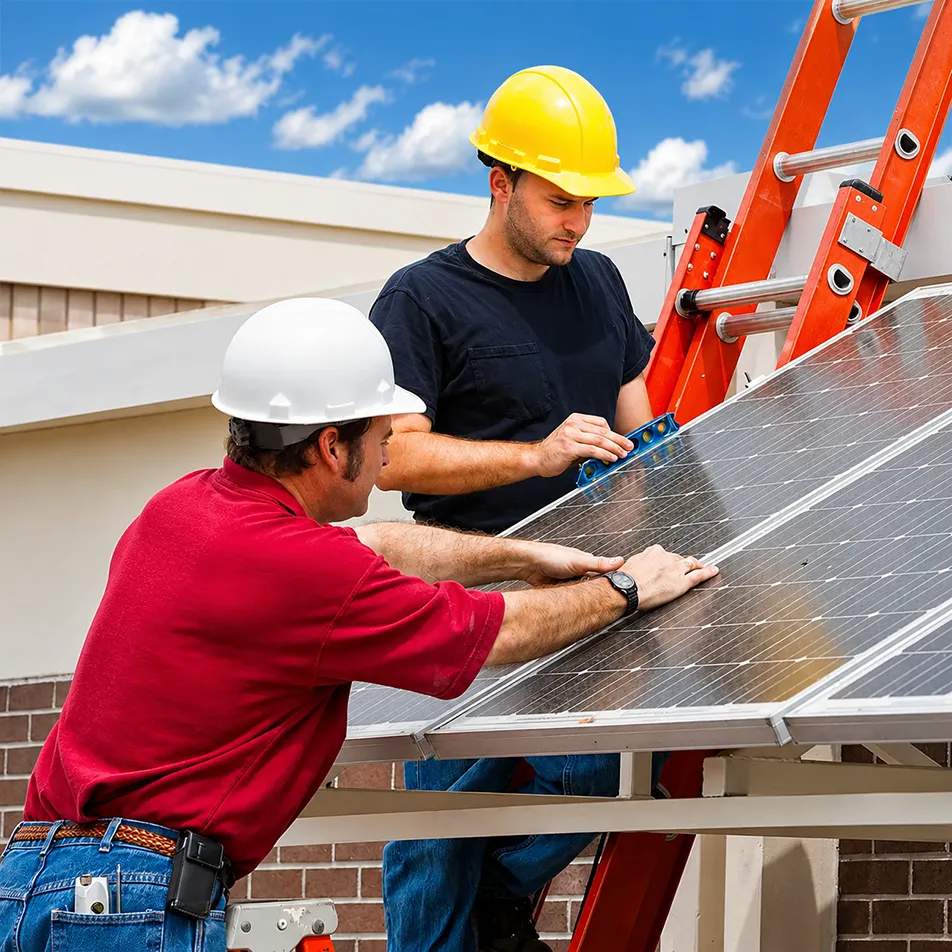
Getting solar panels in San Diego doesn’t have to be complicated. Most of the friction homeowners experience with solar installs comes from working with large companies where your job is handed off between departments, sales reps, and subcontractors. Our process is direct and transparent from the first call to the day your system powers on.
Every Solion residential installation is designed for your specific home, not templated from a catalog.
That said, most residential systems include the same core components.
We install Qcell solar panels. High-efficiency monocrystalline panels with strong performance in San Diego's combination of direct sun and coastal haze. Qcell panels carry a 25-year product and performance warranty and are the same equipment used by major national installers.
We typically install Enphase microinverter systems for residential projects. Unlike string inverters, microinverters work at the individual panel level, so if one panel is shaded or underperforms, the rest of your system isn't dragged down. Enphase also provides module-level monitoring so you can see exactly how each panel is producing.
All panels are mounted with commercial-grade racking systems engineered for San Diego's wind and seismic requirements. Roof penetrations are flashed and sealed correctly, a detail that matters a lot over a 25-year system life.
Every installation includes a monitoring portal, accessible by phone or computer, where you can track your system's real-time and historical production. You'll know your system is working — and so will we.
Permitting and inspection coordination are included in every installation. This is non-negotiable. Unpermitted solar installations create title and insurance issues that affect your ability to sell your home.
We handle SDG&E interconnection paperwork and enroll your system in Net Energy Metering (NEM), which allows you to receive bill credits for excess electricity your system sends to the grid.
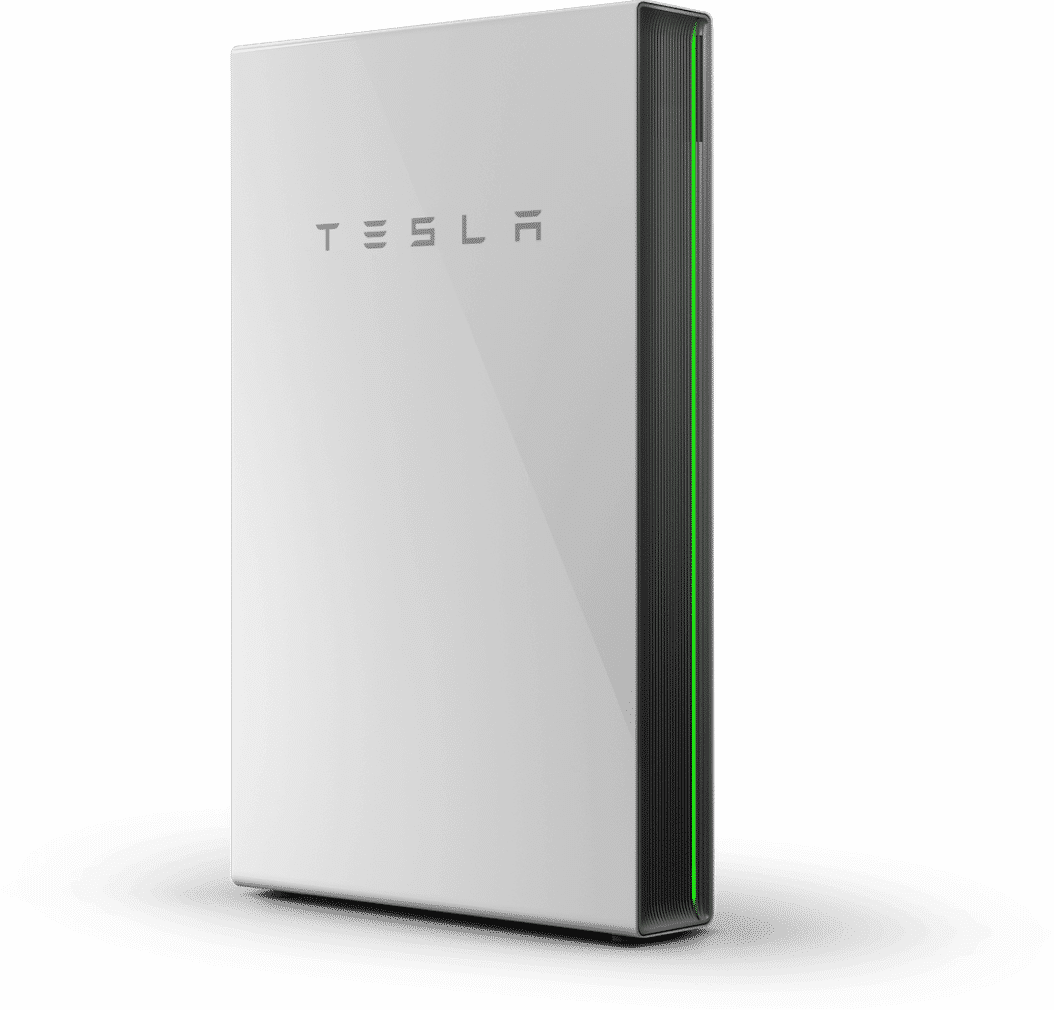
A solar-only system produces energy during the day and exports surplus power to the grid. That works well under SDG&E’s Net Energy Metering program, but there’s a limitation: when the grid goes down, a standard grid-tied solar system shuts off automatically for safety reasons — even in full sun.
Adding a battery changes that equation.
If you’re unsure whether battery storage makes financial sense for your home, we’ll give you an honest answer – with numbers – as part of your quote.
Opening Hours: Mon-Fri 9am – 5pm
Phone: (858) 988-9684
Email: info@solionenergy.com
★★★★★ Rated on Google, Yelp, HomeAdvisor & Thumbtack
Chula Vista · National City · El Cajon · La Mesa · Santee · Spring Valley · Lemon Grove · San Diego · La Jolla · Pacific Beach · Mission Hills · North Park · University City · Mira Mesa · Scripps Ranch · Poway · Rancho Bernardo · Rancho Peñasquitos · Carmel Valley · Del Mar · Solana Beach · Encinitas · Carlsbad · Oceanside · Vista · San Marcos · Escondido · Ramona · Alpine · Lakeside
San Diego’s solar landscape isn’t uniform. Coastal homes deal with marine layer and salt air. Inland areas see higher temperatures and more direct sun hours. Some neighborhoods fall under City of San Diego jurisdiction; others are in unincorporated County territory with different permitting requirements. Canyon-adjacent homes often have shading considerations that affect system design. Our team knows these variables because we’ve been installing here for years, not because we read a spec sheet.
Solion Energy serves homeowners throughout San Diego County. From coastal neighborhoods to inland communities, our team brings the same licensed, local approach to every job.
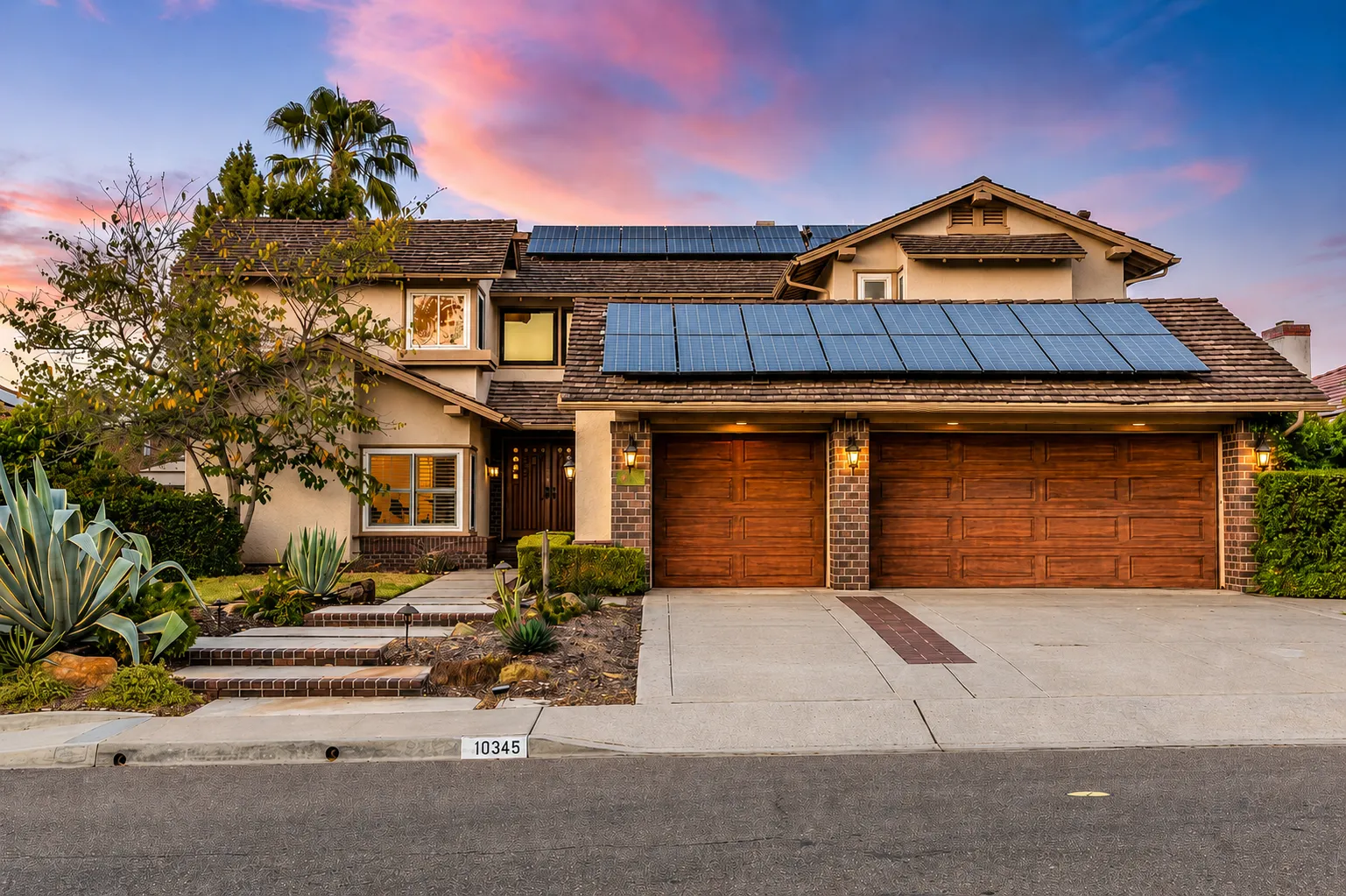
Most residential solar installations in San Diego range from $15,000 to $30,000 before incentives, depending on system size, equipment, and roof complexity. Ask for our full Solar Cost & Pricing Guide for a detailed breakdown.
The physical installation typically takes one to two days. The full process – from signed agreement to Permission to Operate (PTO) – generally runs four to eight weeks, with most of that time spent on permitting and SDG&E’s interconnection queue, not on our end.
Not necessarily, but it’s worth evaluating. If your roof is more than 15 years old or shows signs of wear, we’ll flag it during the site assessment. Installing solar on a roof that needs replacement in the next few years means paying for panel removal and reinstallation later – which you can avoid by addressing the roof first. We work with roofing contractors across San Diego and can help coordinate if needed.
A standard grid-tied solar system will shut off automatically during a grid outage, even in full sun. This is a safety requirement to protect utility workers. To maintain power during an outage, you need a battery storage system such as a Tesla Powerwall. See our Tesla Powerwall page for details.
Most solar customers significantly reduce their SDG&E bill but don’t eliminate it entirely. You’ll likely still pay a small monthly customer charge, and your bill will vary by season based on production vs. consumption. Under Net Energy Metering (NEM 3.0), excess energy your system exports to the grid earns bill credits that can offset charges during months when your system underproduces.
The ideal San Diego roof for solar faces south, southwest, or west, has minimal shading from trees or neighboring structures, and is in good structural condition. Tile, composition shingle, and standing-seam metal roofs are all workable. We’ll give you an honest assessment during the site visit – if your roof isn’t a strong candidate, we’ll tell you.
“I couldn’t be more happy with this interaction and overall service they provided. From start to finish, this Team of professionals kept me abreast of their estimate, communicated often, did phenomenal work and followed up to ensure I was happy with the work!”
Anthony M.
Yelp
“Jake was very responsive to our needs and very informative on the options we had for our Solar needs and wants. His timeline was exactly what he stated. If he needed to change the dates he told us why and agreed to keeping us informed. Thanks for everything Jake!”
Daphne Z.
Yelp
Jake did a fantastic job recently installing 22 panels on my home in Point Loma. He was very knowledgeable all the way through the process. He upheld high standards while doing the installation and everything turned out great!
Eric B.
Yelp